
From Chengdu to Qingcheng: A Day in Dujiangyan Along the Way

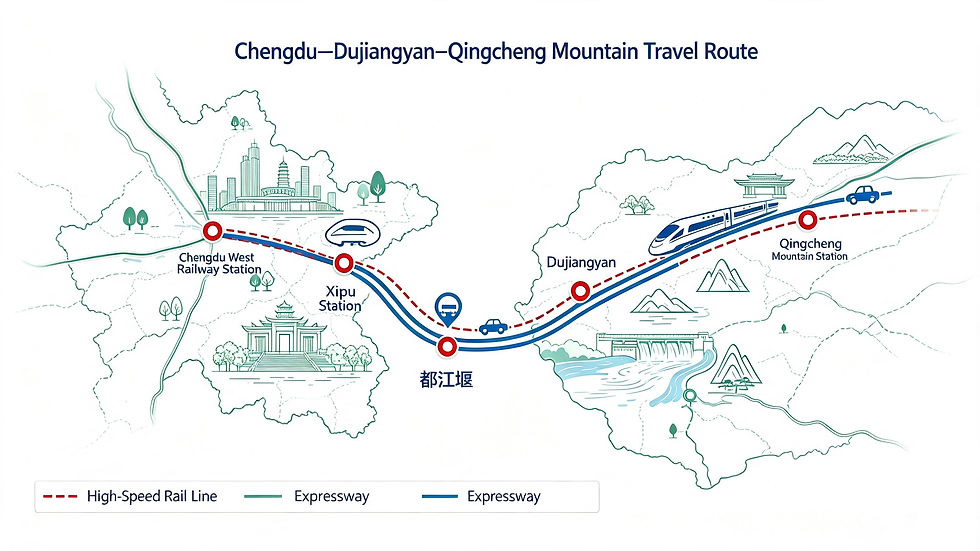
Most travelers heading from Chengdu to Mount Qingcheng pass through Dujiangyan without stopping. They see the name on the train schedule, maybe glance out the window, and keep going.
Dujiangyan is not just a transit point. It‘s a city with its own character — old streets, a river that runs through the middle, and a night bridge that draws crowds just to watch the water glow blue.
The irrigation system is famous, and we‘ve written about it separately. But the city itself is worth a day of your time — a day that fits naturally between Chengdu and Qingcheng.
Here‘s how to spend that day. Not rushing. Not checking boxes. Just moving through a city that has been here for a long time, and has learned how to live well.
Dujiangyan‘s old city wakes up
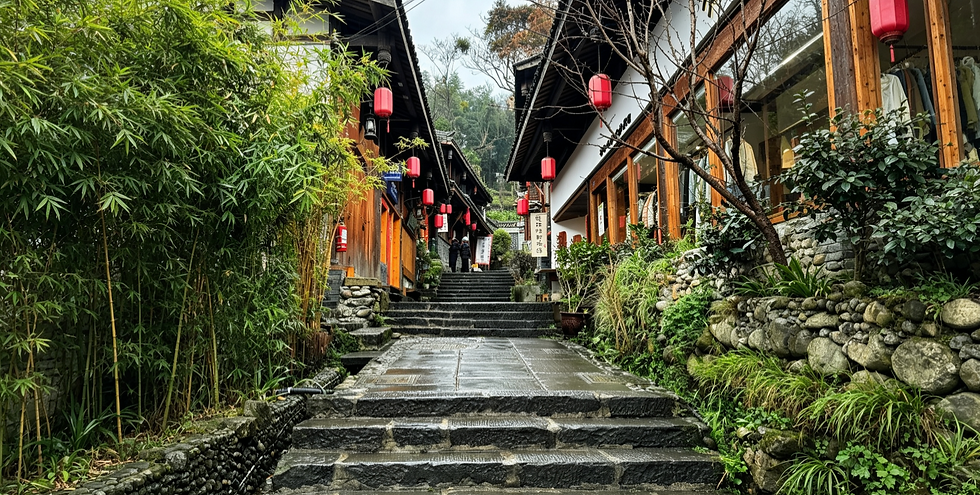
The streets here are narrow and paved with stone. The architecture reflects a rustic Western Sichuan style, featuring dark timber, upturned eaves, and strings of red lanterns hanging beneath the rooflines. You don’t need a map to explore; simply strolling at your leisure is the best way to experience the area.
Xijie (West Street) is undoubtedly the most atmospheric and distinctive part of the district. It winds along the weathered ancient city walls, flanked by traditional wooden buildings; the shops and teahouses on the ground floor vary in height and design, creating a unique and charming streetscape. In the early morning, the street is exceptionally peaceful; shopkeepers unhurriedly open their doors to start the day, while the aroma of frying dough and the fresh scent of hot tea drift from open kitchens, gently permeating the air. As you walk along the ancient wall, you can look down upon a sea of overlapping tiled roofs or gaze into the distance at the river flowing leisurely, its waters shimmering in the light. The scenery may not be breathtakingly spectacular, but the place is imbued with a genuine, warm sense of everyday life—a true taste of the human experience.
Xuanhua Gate is the best-preserved gate of the ancient city. Before wandering deeper into the maze of streets, it is a good idea to stop here first to get your bearings.
Guanxian does not boast a long list of "must-see" attractions, but that is precisely where its charm lies. It is a place for leisurely strolls and spontaneous stops for a cup of tea—so slow your pace and let the town gradually reveal its beauty to you.
Midday views from the summit
Lingyan Mountain sits on the outskirts of Dujiangyan — not as famous as Qingcheng, but quieter, and in its own way, just as rewarding.
The slopes are covered in dense forest, with bamboo groves swaying in the wind. At the top, Lingyan Temple has stood for centuries. Unlike the well-kept temples on Qingcheng, this one feels older, rawer, untouched by excessive renovation. It‘s the kind of place where you can feel the years without needing a guidebook to tell you about them.
From the temple courtyard, the view opens up. The Minjiang River winds through Dujiangyan below, a green ribbon cutting through the city. Standing there, looking out at the water and the mountains beyond, you understand why this spot has drawn quiet seekers for so long.
What to expect:
A short climb up stone steps
Bamboo groves and shaded paths
A peaceful temple with few visitors
A view of Dujiangyan from above
You don‘t need a full day for Lingyan. Two or three hours is enough. Walk up, visit the temple, sit on the steps, look at the city below. Then walk back down and head toward the river.
The “Blue Tears“ Light Up the Night
As the sun sets and twilight settles in, crowds gather on Nanqiao Bridge. It's a scene that feels both lively and warm.
This is a covered wooden bridge spanning the Minjiang River. By day, it‘s a pleasant crossing with a gentle breeze and a view of the rushing water below. By night, the lights come on — and the river transforms.
The soft glow from the bridge reflects onto the water, turning it a deep, almost unreal blue. Locals call it "Blue Tears." The effect comes from the way the light catches the fast-moving current — shimmering, shifting, making the river look like liquid sapphire flowing through the dark.
Every evening, the bridge fills with visitors. Some hold up phones and cameras, trying to capture the color. Others lean against the wooden railings, watching the water in silence. Food vendors line the edges, selling snacks and drinks. The atmosphere is busy but easy — the kind of city night that makes you want to stay a little longer.
The City and the Mountain
Mount Qingcheng invites you to climb, to look out, to feel small against the misty peaks. Dujiangyan invites you to walk slowly, sit by the water, and let the city show you its rhythm.
Both belong in the same journey. One is where people go to find quiet. The other is where people have been living well for a very long time.
If you‘re traveling from Chengdu to Qingcheng, don‘t pass through Dujiangyan. Stop. Stay a day. Walk the old streets. Watch the blue water. Eat at a low table with the locals.
Then, the next morning, climb the mountain.
One day in the city, one day on the mountain — and a short journey between them. That‘s a good way to spend time in this part of Sichuan.
One step at a time, MistPanda will help you find your way to the misty mountains — and the places that surround them.
Comments